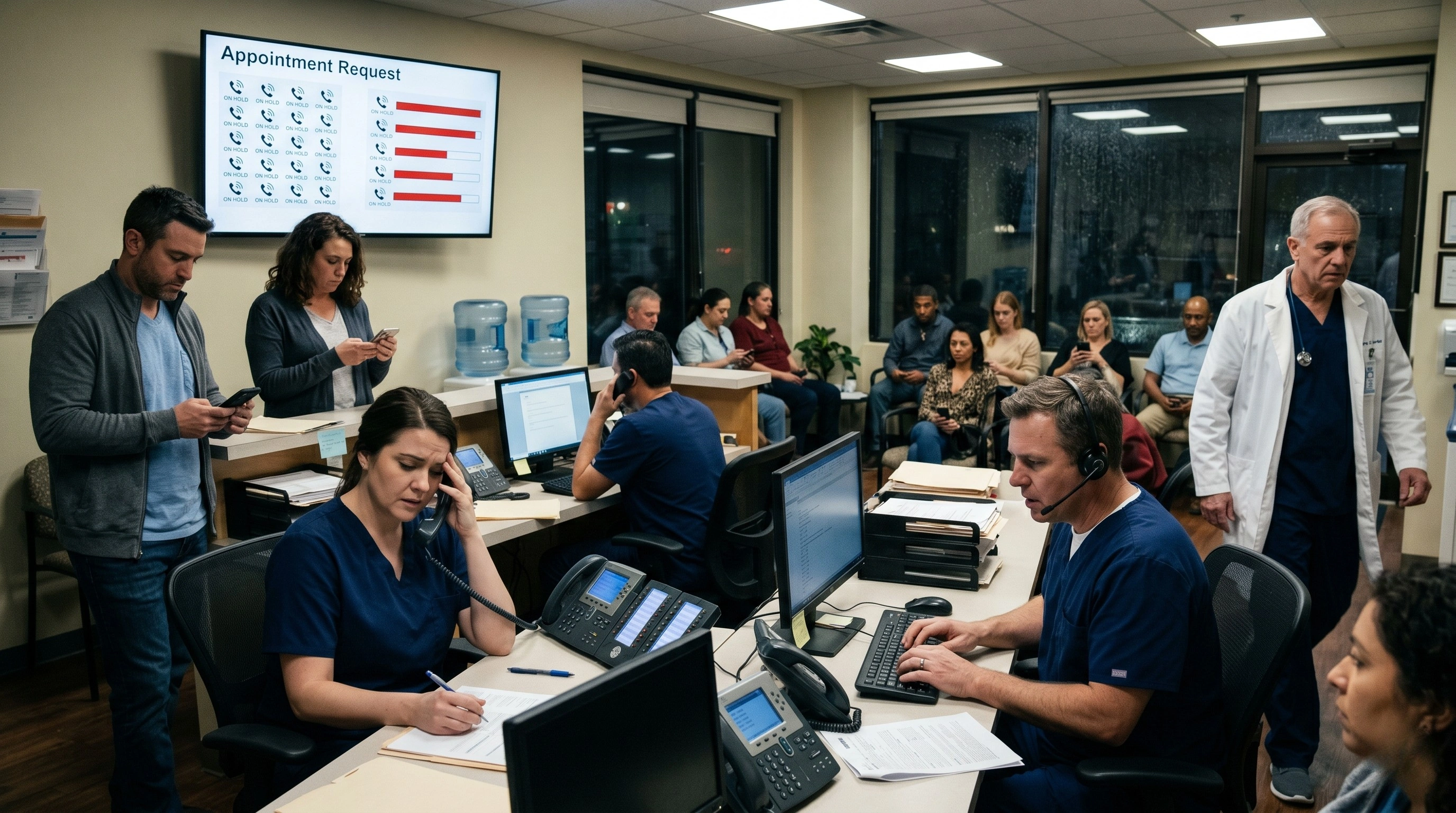

No provider is immune to claim denials; generally, numerous claims are denied before they are even given to the billing department. Workflows of the scheduling, registration, insurance verification, and prior authorization processes can all determine how well a claim is initially submitted correctly or delayed due to simple, avoidable mistakes. Frequently, claim denials occur weeks after patients have been treated, yet denial workflows are not followed and corrections/appeals are made by the billing department. Easy-to-fix errors such as missed prior authorizations, eligibility problems, and incorrect patient demographics should have been prevented if proper workflows were used all along the continuum of care.
Occasionally, issues that present as workflow problems in the billing department are actually breakdowns in prior patient care continuum workflows. While alarming, most of these errors could be avoided. Missed or outdated insurance updates, eligibility not verified, incomplete intake, and transcription errors can all lead to denied claims, increased work, and loss of revenue; however, by the time these occur, the patient has already been treated, and the loss is realized. Most people fail to consider this facet of denied claim management; while appeals and collections are critical to a healthy revenue stream, they are reactive rather than preventive measures against loss already sustained. Denied claim management is a facet that is crucial and should not be disregarded, as it offers a high potential for positive revenue cycle outcomes at the time patient and insurance data/forms are gathered.
This article will discuss various workflow failures and how they contribute to denials and increase work for billing staff, and discuss ways to prevent these workflow failures.
The number that should bother you
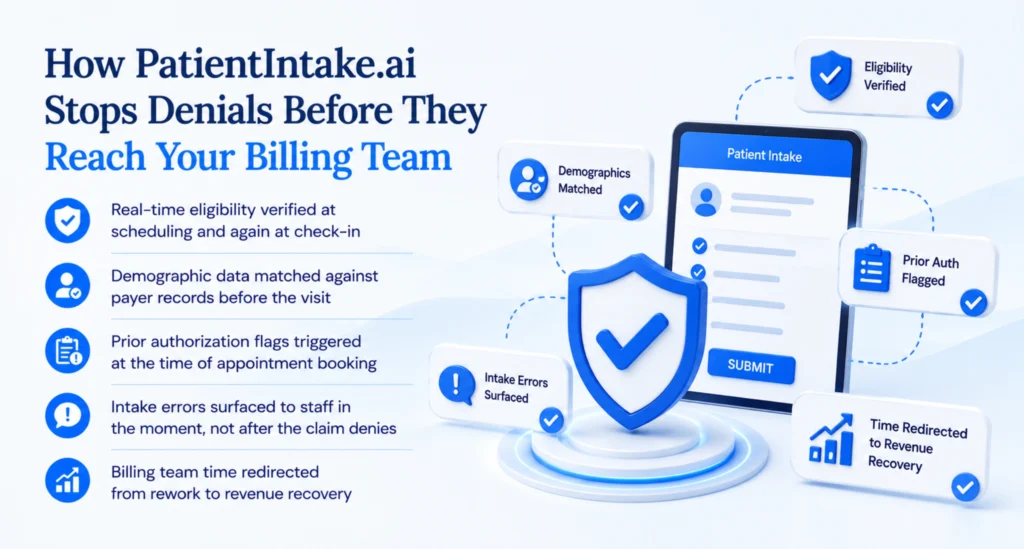
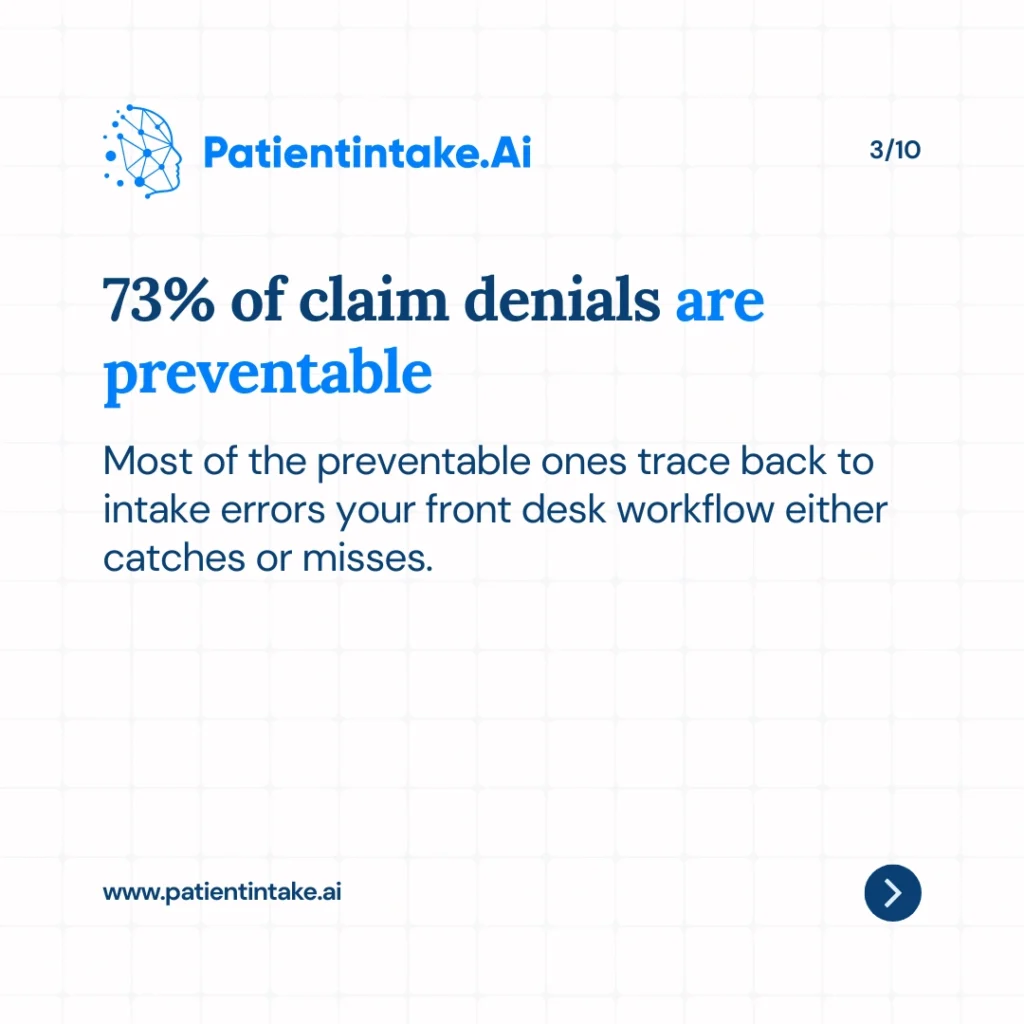
Medical Economics puts it plainly: roughly 73% of claim denials are preventable, and the most common causes trace directly to front desk errors. Patient registration mistakes, insurance verification failures, missing prior authorizations, and incorrect demographic data account for the bulk of denial volume before a single code gets billed.
That is not a billing problem: It is an intake problem. And if your denial management strategy focuses entirely on the back end, you are spending money to clean up errors you had every opportunity to stop at the source.
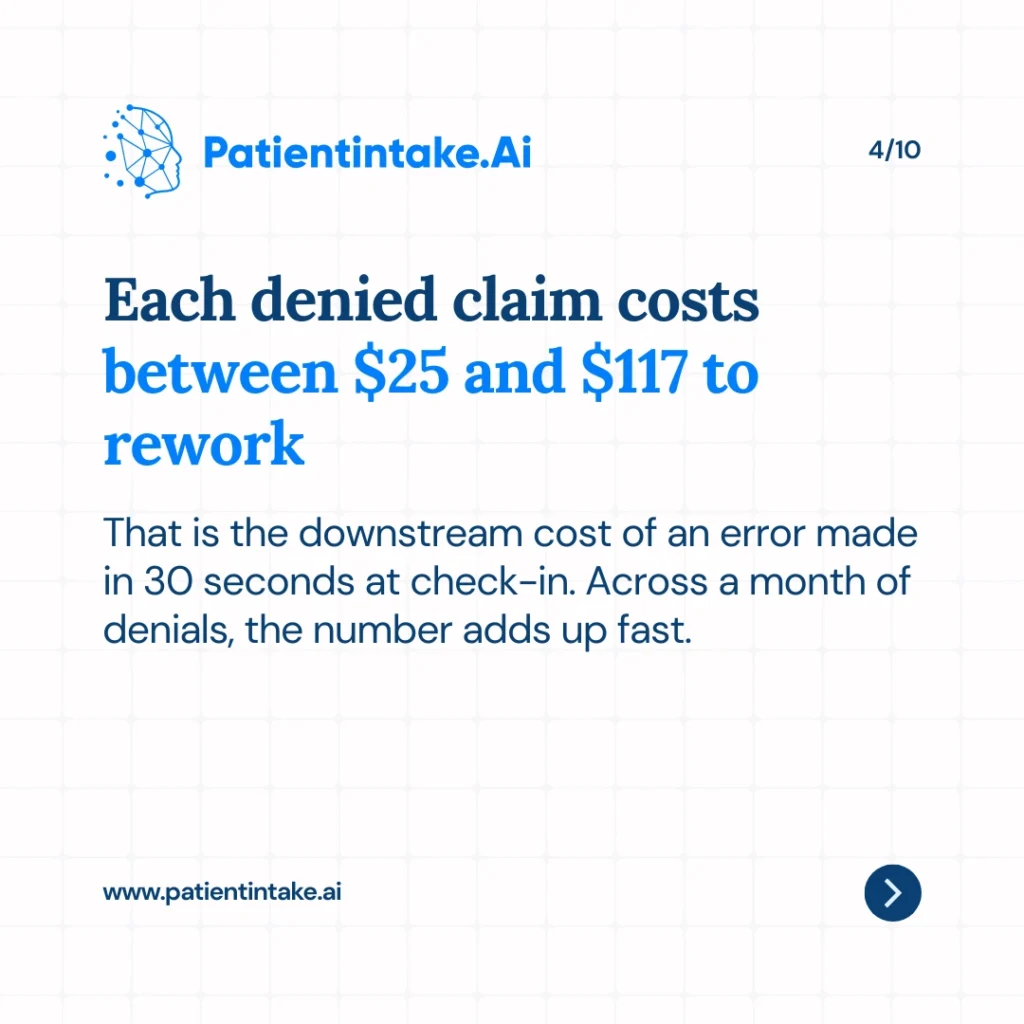
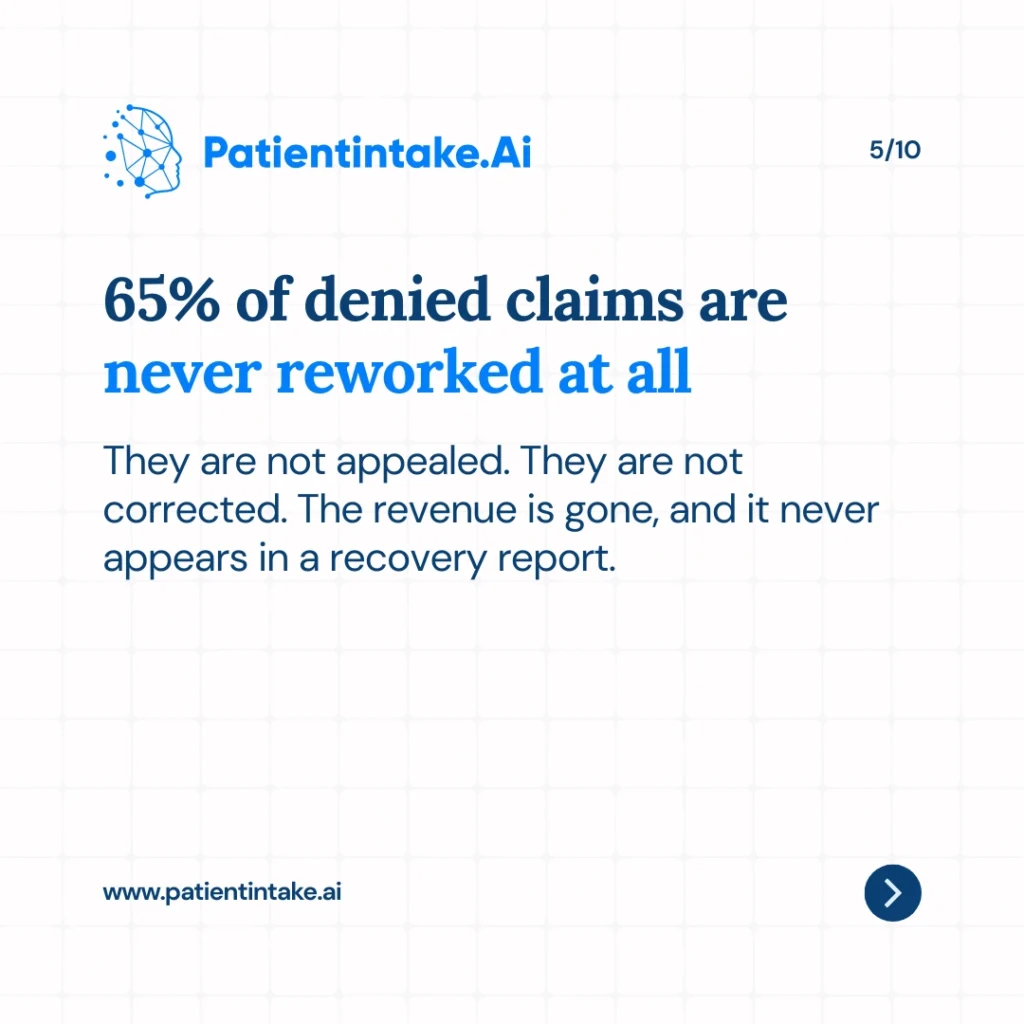
The cost is not abstract: Every denied claim creates additional administrative work, requiring staff time and resources to investigate, correct, and resubmit the claim. A practice processing 500 claims a month with a 10% denial rate is absorbing somewhere between $1,250 and $5,850 in rework costs alone, not counting the revenue that never comes back because some denials never get appealed at all. When denied claims go unresolved, healthcare organizations risk leaving significant reimbursement dollars uncollected. That revenue is simply lost.
Where the front desk creates the problem
Denial causes do not appear out of nowhere. They accumulate across predictable failure points, and each one is something your registration workflow either catches or misses.
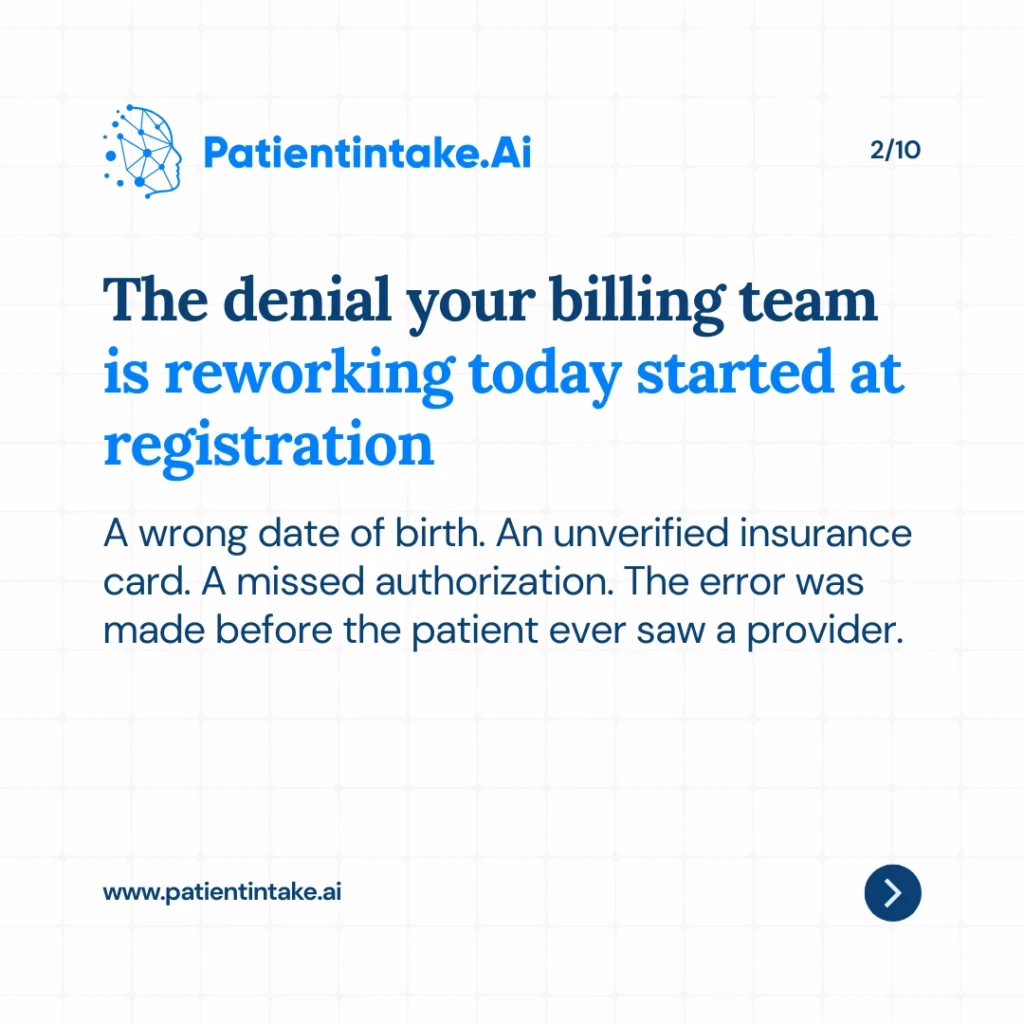
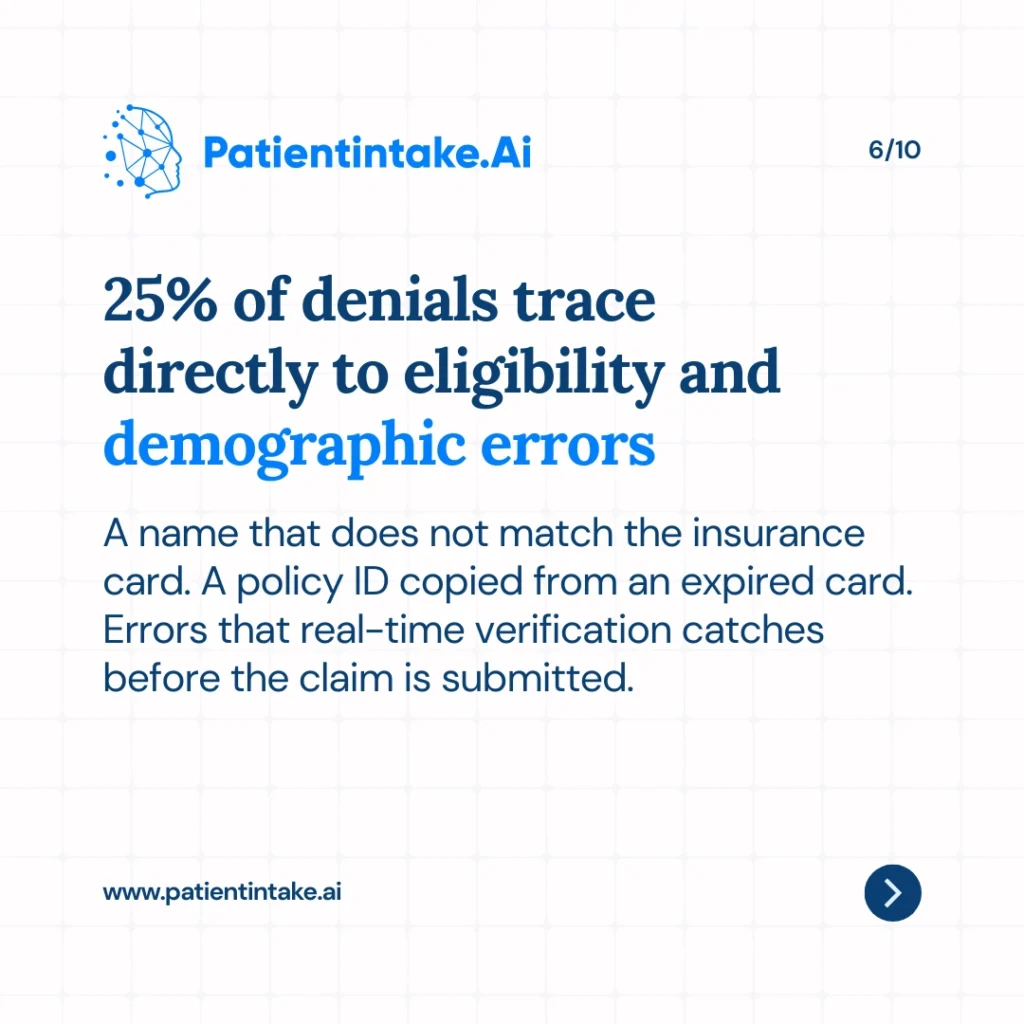
Patient demographic errors: A date of birth entered one digit off. A name that does not match the insurance card because the patient recently married or divorced. A policy ID copied incorrectly from a card that was photographed instead of scanned. These errors pass through intake and hit the payer as a failed member eligibility match. The claim denies. Your billing team identifies the error, corrects it, and resubmits, assuming the timely filing window has not already closed. The CAQH Index found that 25% of claim denials in physician practices stem from eligibility and patient information errors. Every one of those was created before the patient reached the exam room.
Eligibility not verified: Verifying insurance eligibility the day before or the morning of an appointment should be standard. In many practices, it is not. Staff may check a card on file without confirming the plan is still active, the patient is still covered under that employer, or whether the deductible has been met. A patient whose employer changed their plan on January 1st and who has not updated their information will generate a denial that looks like a billing error but is actually a verification gap. Practices that confirm coverage details at multiple points in the patient journey are often better positioned to prevent eligibility and demographic-related claim denials. The ones that rely on whatever card the patient brings are subsidizing their payers with uncollected revenue.
Prior authorization gaps: Authorization requirements change. Payers add services to their prior auth lists without much notice, and a service your team approved without authorization six months ago may now require one. If your front desk is not running authorization checks against current payer rules at the time of scheduling, some percentage of your specialty referrals, imaging orders, and elective procedures are going out without the coverage they need. The AMA’s 2023 Prior Authorization Physician Survey found that 94% of physicians report care delays tied to prior authorization, and many of those delays begin with a missed auth requirement at scheduling. A prior auth denial is one of the hardest to recover from. In many cases, you cannot appeal your way out of a missed authorization requirement. The revenue is gone.
Incomplete or missing intake forms: A patient who skips the field for their secondary insurance, does not disclose a workers’ compensation case, or leaves a referral source blank creates a gap your billing team may not catch until the claim comes back. Some of those omissions are billing compliance issues. Others create coordination of benefits problems that generate secondary claim denials months after the initial visit. Even small mistakes in determining primary and secondary coverage can disrupt the claims process and lead to reimbursement delays or denials.
What happens when the billing team absorbs the problem
However, if front desk verification is weak, then your billing department is a correction team rather than a billing department. They are not just billing; they are correcting registration data, pulling down authorisations, checking insurance via phone calls with patients, and appealing denied claims because of errors they should have caught within 2 minutes at the check-in.
This is your bottleneck. Every increase in practice volume adds to your rework burden at the same rate. Your billing staff cannot scale quickly enough to accommodate the input mistakes, and any revenue that is not recovered in a timely way will become a write-off. This write-off will be recorded not as front desk errors but as denial write-offs, making it look like a billing performance issue when the bottleneck was always at the front of your billing department.
The other cost is much more elusive, however. You are making your revenue recovery team spend hours of time working on issues that shouldn’t be theirs to begin with. Administrative burden is still one of the largest contributors to physician burnout and additional pressure on overworked clinical staff, and for billing, it means that front desk errors simply pile onto your burden of rework. You are not just losing revenue, but your people as they attempt to capture it.
What fixing it at the front desk actually looks like
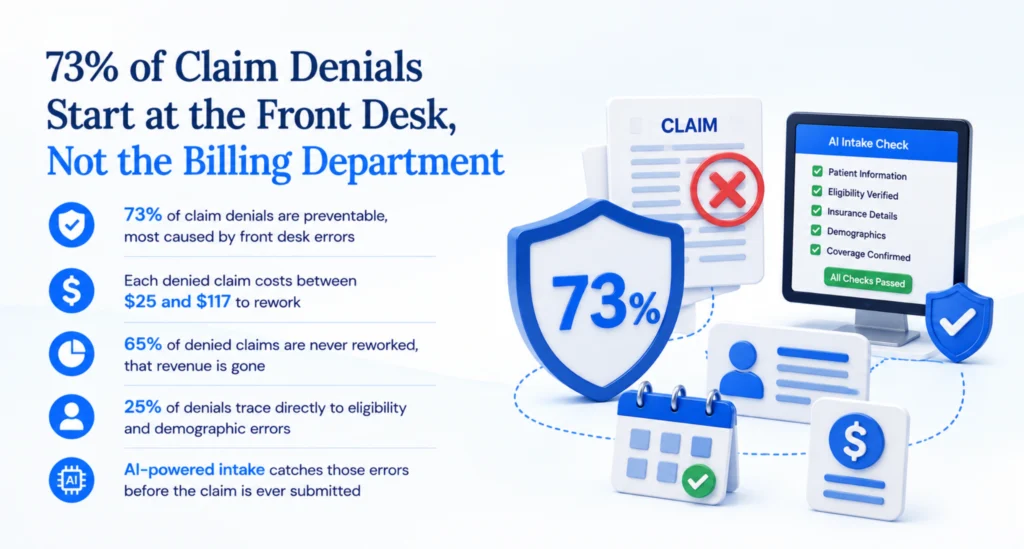
What they are doing that materially reduces denial rates on the front end is not rocket science. They are bridging the gaps in a particular order:
Real-time eligibility at scheduling and check-in: The ability to confirm patient coverage when the appointment is booked, and again when the patient arrives, helps practices catch insurance changes that occur between appointment setting and visit that happen more frequently than they often realize. Confirming that the patient is insured through real-time eligibility checks on the front end pre-empts most rejections for lack of coverage, cuts down on billing admin, and gets the practice paid more quickly. If your EHR has automatic runs and you aren’t running it at both touchpoints, you need to do it.
Scripted registration intake for high-risk data fields: What fields generate most demographic denials? DOV, patient name spelling, insurance ID, and group number. Having a scripted intake that prompts staff to read each one back to the patient or to confirm it from a scanned insurance card and enter it from that rather than patient response has a high yield, and only adds about 90 seconds of time per patient. When patient data is verified, most practices will report fewer errors, fewer rejected claims, and significantly less rework, more than offsetting the time cost of verification.
Payer and service specific prior authorization tracking: Your billing department knows which payers are putting new authorizations in place, but front desk personnel need to know that when the appointment is being made, not after the claim has been denied for want of it. A shareable reference of prior authorization requirements per payer that is updated monthly or more often helps the front desk to identify potential problem visits before scheduling. Payer rules about authorization keep changing, so this has to be managed carefully. If you have an Authorization workflow in your EHR, use it.
Denial pattern reporting back to registration: Your billing department is capable of reporting back what denials they are seeing. Front desk staff are not-that information is rarely communicated between those two departments in a usable fashion. Closing the loop by having the most frequently denied reasons, those tied to their daily workflow, reported back to registration enables them to correct future registrations. Staff members will be more likely to avoid errors during intake when they are aware of the upstream impact of their decisions.
Conclusion
They start a lot earlier with scheduling, registration, insurance verification, and patient intake. By the time a denial appears in a work queue, the underlying error has often passed unimpeded through multiple touchpoints.
And this is why denial reduction practices cannot afford to treat intake as a purely administrative function. Every eligibility check completed, every demographic field verified, every authorization requirement identified before the visit builds a stronger foundation for clean claims and fast reimbursement.
The challenge is maintaining that level of accuracy consistently as patient volumes increase and payer requirements become more complex. Manual processes can only take teams so far. Many organizations are now turning to digital intake workflows that help automate verification tasks, standardize data collection, and reduce opportunities for human error before claims are ever submitted.
By bringing these processes together in a more structured and automated workflow, practices can improve data accuracy, reduce administrative burden, and prevent many of the issues that later result in claim denials. Tools that support real-time insurance verification and eligibility checks can play an important role in strengthening the front end of the revenue cycle, helping teams identify potential coverage issues before they affect reimbursement. Because when it comes to denial prevention, the most effective fix is often the one that happens before the claim
Front desk denial prevention is the practice of identifying and correcting registration, eligibility, and authorization issues before a claim is submitted. By addressing these errors early in the patient intake process, practices can reduce avoidable denials, minimize administrative rework, and improve overall revenue cycle performance.
A substantial number of claim denials can be traced back to eligibility and patient information errors that occur before a claim is ever submitted. Prior authorization denials, which make up another significant share, also trace to scheduling and intake workflows when authorization requirements are not checked before an appointment is confirmed. Together, these categories represent the majority of preventable denial volume.
Ask them. Most front desk staff have limited visibility into what happens after a patient leaves. They are not seeing denial reports, rework queues, or write-off data. If your team cannot name the top denial reasons your practice sees, the feedback loop between billing and registration is broken. Closing it is one of the lowest-cost changes you can make to denial management. Regular analysis of denial root causes can help teams uncover process gaps and prioritize opportunities for improvement.
Yes. Patient intake services can help verify patient information, identify eligibility concerns, and surface authorization requirements before the appointment. Addressing these issues early helps reduce avoidable claim denials and minimizes the time spent on downstream corrections.