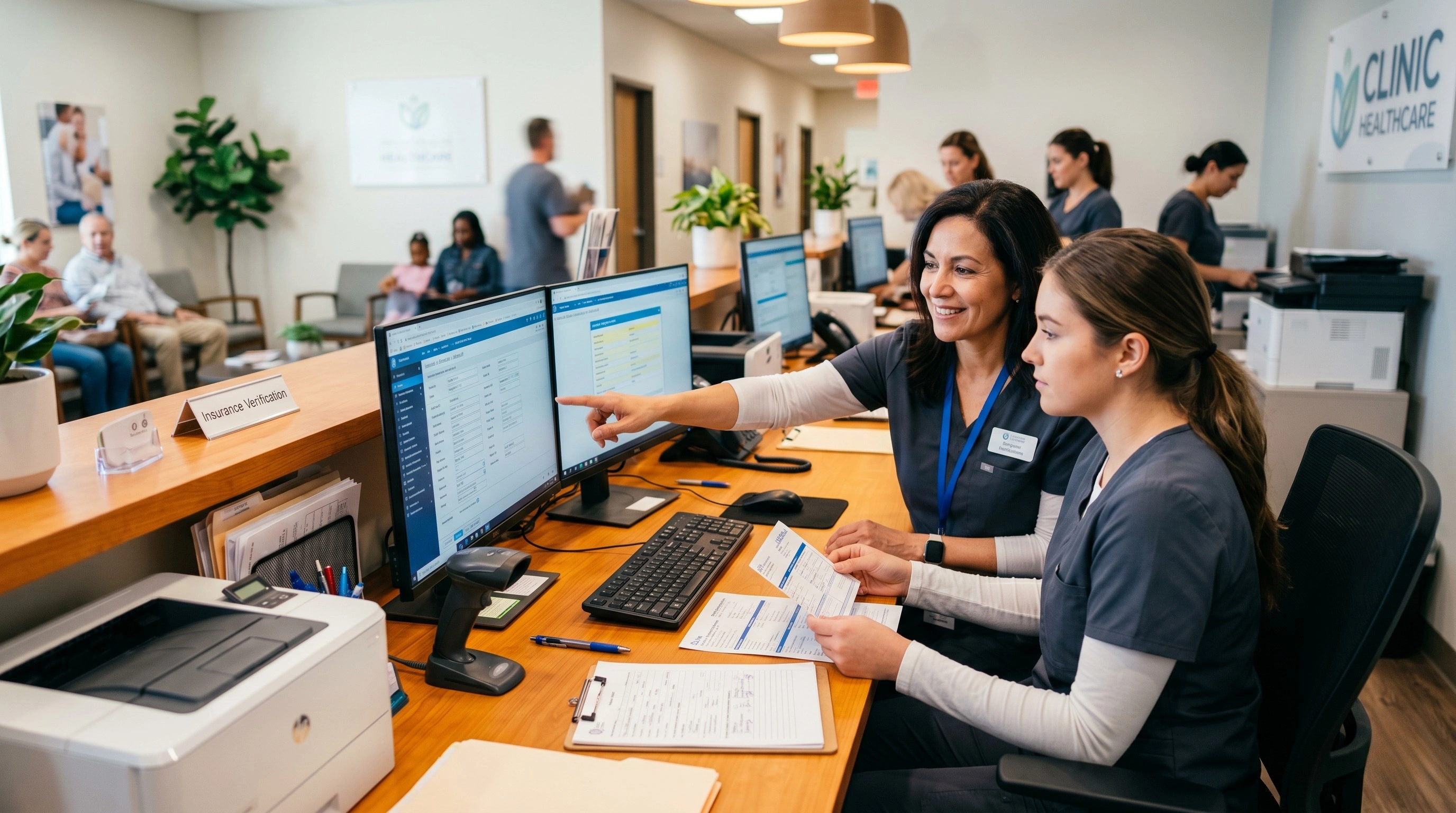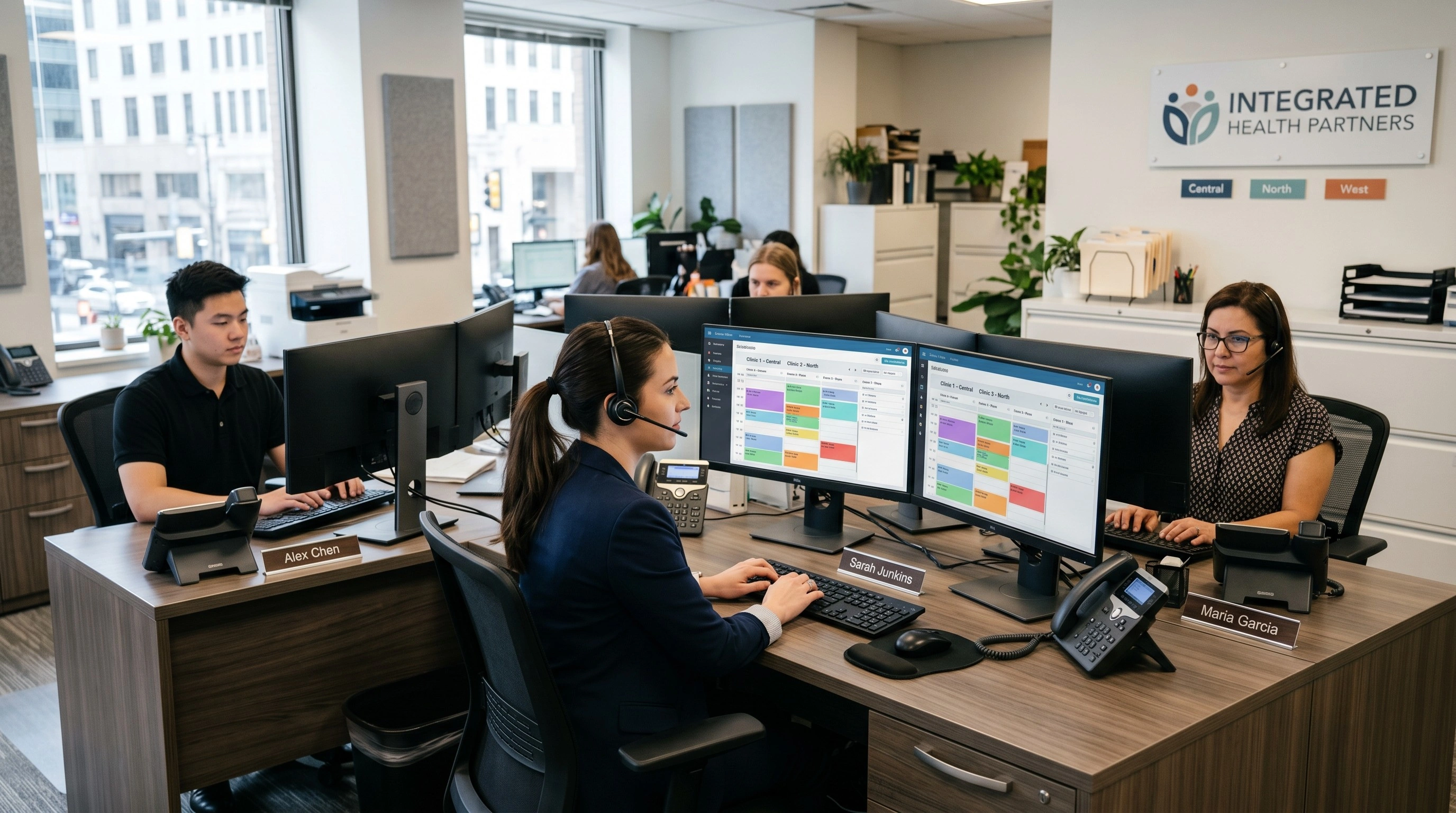
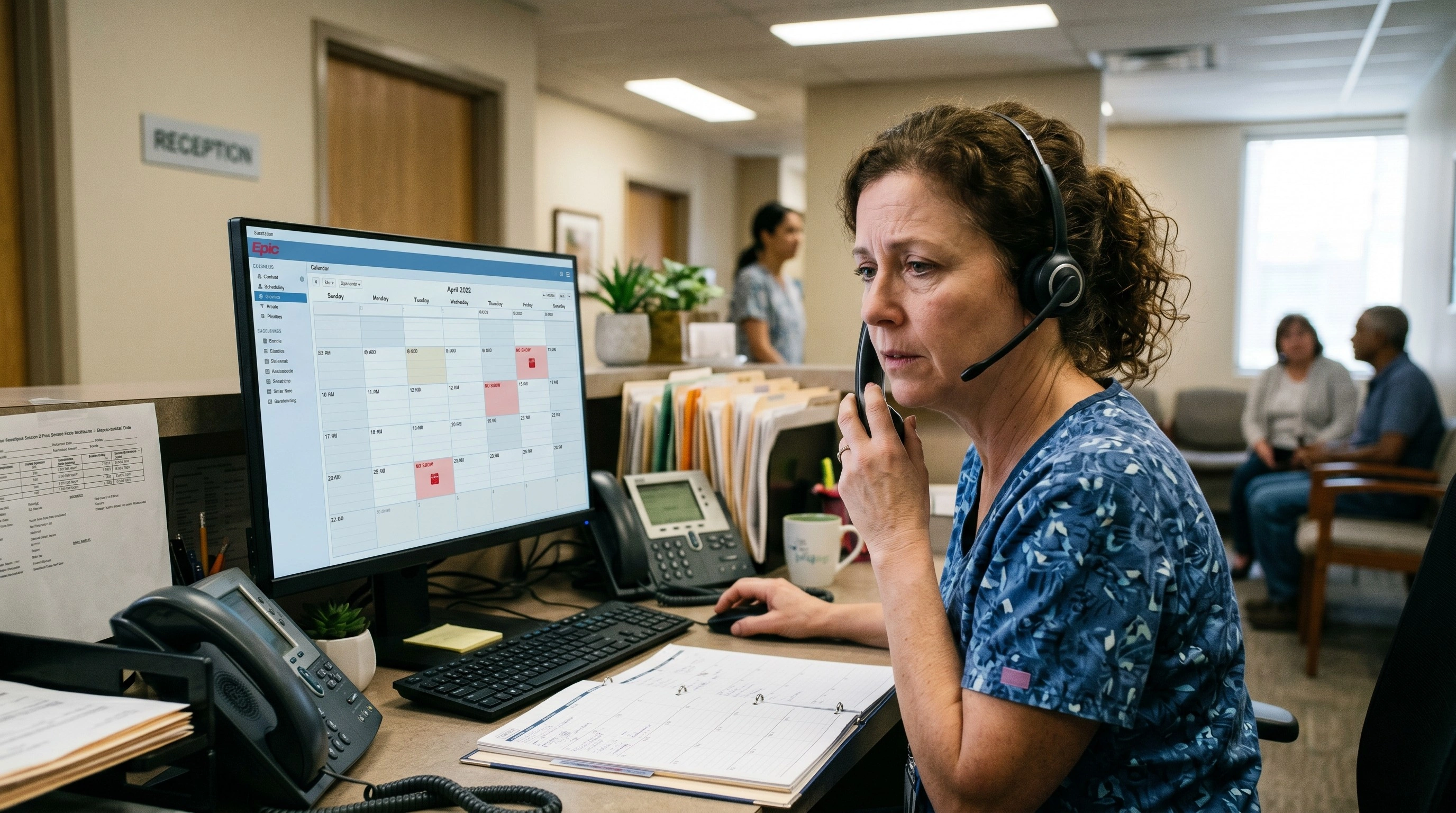
So, picture this. It’s 10:15 on a Tuesday morning. Your 10:00 is a no-show again. Your front desk coordinator dials the patient, gets voicemail, leaves a message, updates the schedule, and moves on. The whole interaction takes maybe four minutes of her time.
Four minutes sounds harmless. But when you start multiplying that across every no-show your practice absorbs in a week, a month, a year, and you layer in the staff hours burned on manual outreach, the unfilled slots that never got backfilled, and the scheduling chaos that comes from compensatory overbooking, something uncomfortable takes shape.
Why is patient access such a critical pain point in healthcare today?
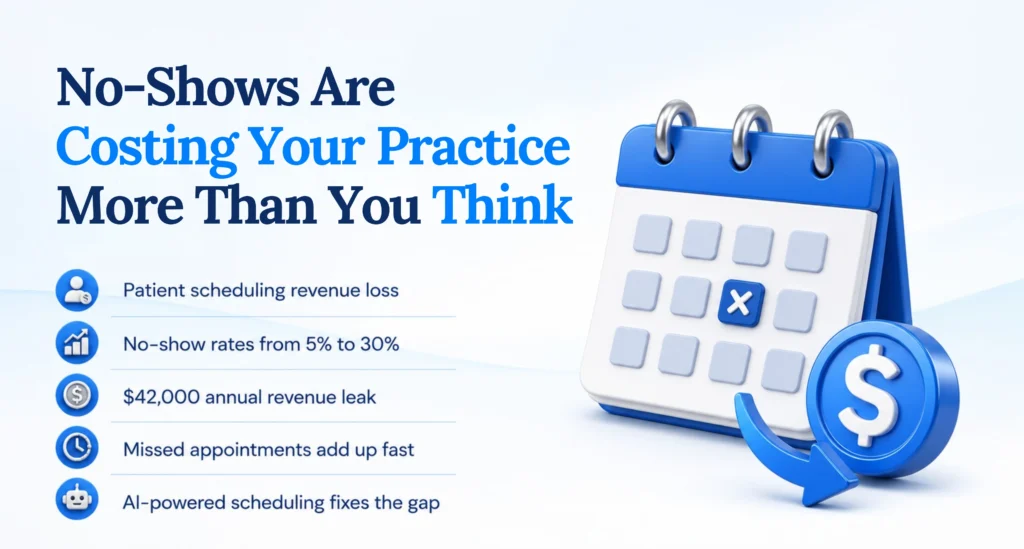
For example: A typical independent or small group practice, that number lands somewhere around $42,000 per year in patient scheduling revenue loss. Here’s how that math works: if your practice sees 25 patients a day, five days a week, and your no-show rate sits at 18% right in the middle of what most outpatient practices actually report you’re absorbing roughly 90 missed appointments every month. At a $150 average appointment value, that’s $13,500 in monthly exposure. Annualized: $162,000 in scheduled appointments that simply evaporate. Even recovering a fraction of that changes what your practice looks like at the end of the year.
It’s not a sudden hit you can audit and correct. It drains slowly, slot by slot, buried in what your team has quietly accepted as “the normal cancellation rate.” And the reason it keeps happening isn’t because your staff isn’t working hard enough. It’s because the tools and workflows most practices rely on were built for a world that no longer exists.
This article will show you exactly where that money is going, why the standard reminder system isn’t stopping it, and what practices that are actually closing the gap are doing differently.
The Problem Isn't Your Staff. It's the System They're Working In.
The no-show itself is only the most visible part of the problem. The rest of the damage is quieter, and it shows up in three specific places.
Your Patients Can’t Self-Schedule, So They Don’t Schedule at All
When a patient has to call during business hours, sit on hold, and wait for a callback just to book an appointment, many of them simply don’t. They put it off. They find someone easier to reach. According to the Medical Group Management Association (MGMA), patient demand for digital self-scheduling consistently outpaces what most US practices currently offer and the gap is widest among working-age adults.The result is open slots on your calendar that should have been filled days ago, from patients you never even knew you lost.
Your Reminder System Is a Fire Alarm, Not a Strategy
Most practices send one reminder, 24 to 48 hours out. By then, the patient who was already uncertain has had days to forget, deprioritize, or quietly decide not to come. A study published in the American Journal of Managed Care found that reminder effectiveness improves significantly when outreach happens earlier and through the patient’s preferred communication channel two things a single day-before text cannot do.
When no one follows up on a referral, prompts a return visit, or re-engages a patient who’s gone quiet, that care simply doesn’t happen. And those slots stay empty.
Administrative Drag Is Burning Hours Your Staff Doesn’t Have
It is said that physicians and staff spend nearly half their working hours on administrative tasks. For your front desk, that means two to three hours daily can go toward EHR data entry alone, hours not spent on outreach, follow-up, or patients sitting in your waiting room.
When staff are buried in manual entry, outreach falls behind. When outreach falls behind, no-shows go unaddressed. When no-shows pile up, your team spends even more time reacting to gaps in the schedule. The cycle feeds itself.
What Practices That Are Closing the Gap Are Doing Differently
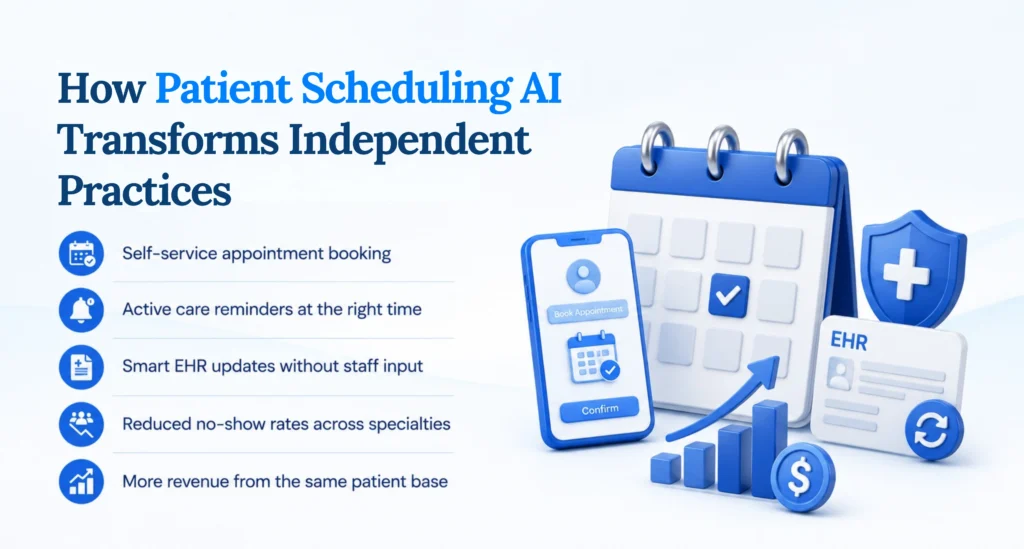
The practices seeing real improvement aren’t hiring more coordinators. They’re replacing reactive, manual workflows with patient scheduling AI that handles the parts of the process that don’t require a human. Here’s what that looks like in practice.
Self-Service Scheduling That Matches Patients to the Right Care
AI-powered scheduling lets your patients book, reschedule, or cancel on their own time no phone call required. It matches each patient to the right provider, appointment type, and available slot based on their history and clinical needs, all without your staff lifting a finger.
For example: A patient named Kate receives a message from Healthcare Associates Group notifying her that upcoming appointments are ready for check-in confirmation. She sees Dr. Barry Allen’s orthopedic slot on November 21 at 5:45 PM and confirms with a single tap right from her phone. No hold music. No callbacks. No coordinator time spent chasing a confirmation. The appointment is locked, the EHR is updated, and Katherine shows up because she was never left wondering if her visit was still on the books.Patients who can schedule themselves do schedule themselves. And when they do, they show up.
Active Care Reminders That Run Before the Problem Starts
Rather than a single reminder the day before, AI-driven outreach reaches patients at the right moment throughout their care journey prompting them to book recommended follow-ups, acting on referrals before they go cold, and re-engaging patients who haven’t been in recently.
For example: Sara’s clinical records show she qualifies for a physiotherapy visit related to her rheumatoid arthritis. Without any staff intervention, the system sends her a personalized message from Healthcare Associates Group: “Your clinical records and history qualified you for a physiotherapy visit.” The message explains the condition, outlines the health risks of leaving it unaddressed, and gives Emma a clear reason to act along with a single “I’m Interested” button. She books. That appointment would never have existed under a standard reminder-only workflow. The difference between a patient who no-shows and one who reschedules in advance is often just whether anyone reached out at the right time.
Smart EHR Updates That Happen Without Your Staff
When scheduling AI is integrated with your EHR, appointment changes, patient demographics, insurance details, and intake responses flow directly into the record automatically, accurately, and without a staff member entering a single field.
For example: A patient named Andrew logs in and sees a notification: “Your demographic information review is in progress 20 seconds to review.” The system prompts him to update dependent information and complete a rheumatology questionnaire his doctor requested. He does both from his phone. By the time he arrives for his appointment, his EHR record patient ID, DOB, address, medications, and history is already current. No intake clipboard. No manual re-entry. No claim denied because an old address was still on file.Your coordinators spend less time on data entry and more time on the work that actually requires a person.
Together, These Three Functions Change the Structure of How Your Practice Runs
You stop absorbing no-shows as a cost of doing business. You stop losing patients who never called because calling was too hard. And you stop burning staff hours on data entry that a better-integrated system can handle automatically. The revenue that was always there starts coming back.
But the shift isn’t just financial. When your scheduling process works the way it should, something else changes too the experience inside your practice. Your front desk isn’t fielding a backlog of callbacks at 9 AM. Your coordinators aren’t manually chasing confirmations for appointments that are still 72 hours away. Your staff has the bandwidth to actually be present with patients who are standing in front of them.
That matters more than most practice managers are willing to say out loud. Burnout at the front desk is real, and a significant share of it comes from the repetitive, low-value administrative work that scheduling AI is designed to absorb. When that work moves off your team’s plate, the quality of every patient interaction that remains improves.
The practices that are winning on no-show rates aren’t doing it by working harder. They’re doing it by building a system where the friction that causes patients to drift, forget, or disengage gets addressed automatically before it ever becomes a problem at the front desk. Self-scheduling removes the barrier to booking. Active care reminders close the gap between a provider recommendation and a confirmed appointment. Smart EHR updates keep records clean so nothing falls through the cracks downstream.
None of these functions require a new hire. They require a decision to stop accepting the status quo as inevitable. The infrastructure to do that exists. The practices using it are already seeing the difference.
FAQs
It addresses the reasons patients don't show up before the appointment date. Self-scheduling removes friction. Active reminders re-engage patients before they drift. Automated follow-ups on referrals keep patients in their care cycle. By the time the appointment is 24 hours away, the AI has already done the work of keeping the patient connected to it.
Yes. Practices that offer it consistently report higher booking rates from patients who previously called infrequently or didn't book at all. Younger patients in particular prefer it. The practices seeing the biggest gains are the ones that make self-scheduling the easiest path, not an afterthought buried in a patient portal.
No. It changes what they spend their time on. When scheduling AI handles booking, routine reminders, and EHR updates, your coordinators shift to higher-value work: complex scheduling situations, patient questions, and the personal contact that actually requires a human. Most practices find their staff less overwhelmed, not reduced.
Most practices see measurable improvement in no-show rates within 60 to 90 days of consistent use. The gains compound as the system learns patient behavior patterns and outreach becomes more targeted over time.
Most modern scheduling AI solutions are built to work with the EHR systems independent and small group practices already use. Before choosing a platform, confirm native integration with your specific EHR. The practices that get the most out of scheduling AI are the ones where the tool and the EHR are actually talking to each other, not running in parallel.