
What happens to your practice when a patient can't book an appointment in under 3 minutes
There is a version of this story that ends with a no-show report pulled every Monday morning. Your front desk team circles names, leaves voicemails, and wonders why patients ghost. The real story starts earlier, though. It starts the moment a patient picked up the phone, waited on hold, gave up, and called someone else.
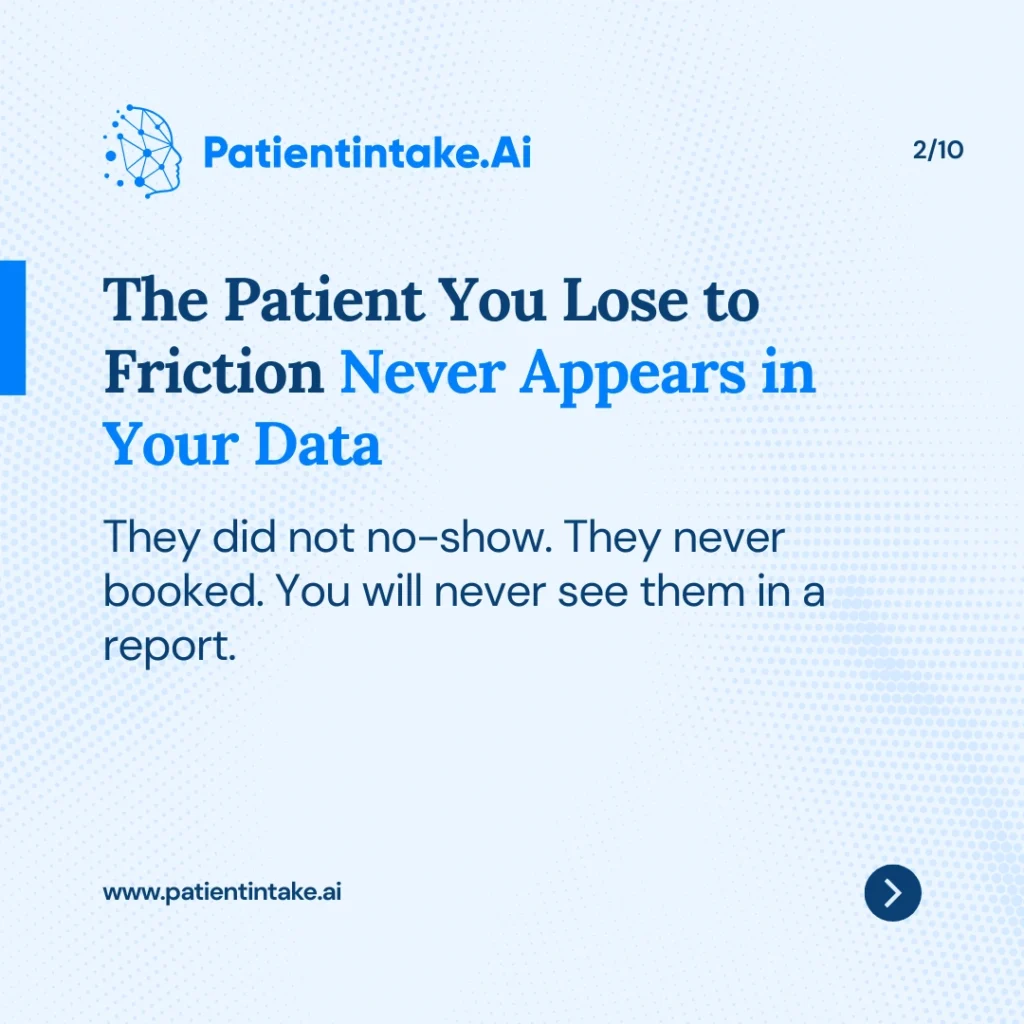
You never see that patient in your data. They were never a no-show. They were never anything, because they never booked.
This is the gap that most practice operations content ignores. No-shows get all the attention. Booking friction, which is the thing that creates many of those no-shows in the first place, gets almost none.
The 3-minute threshold is not arbitrary
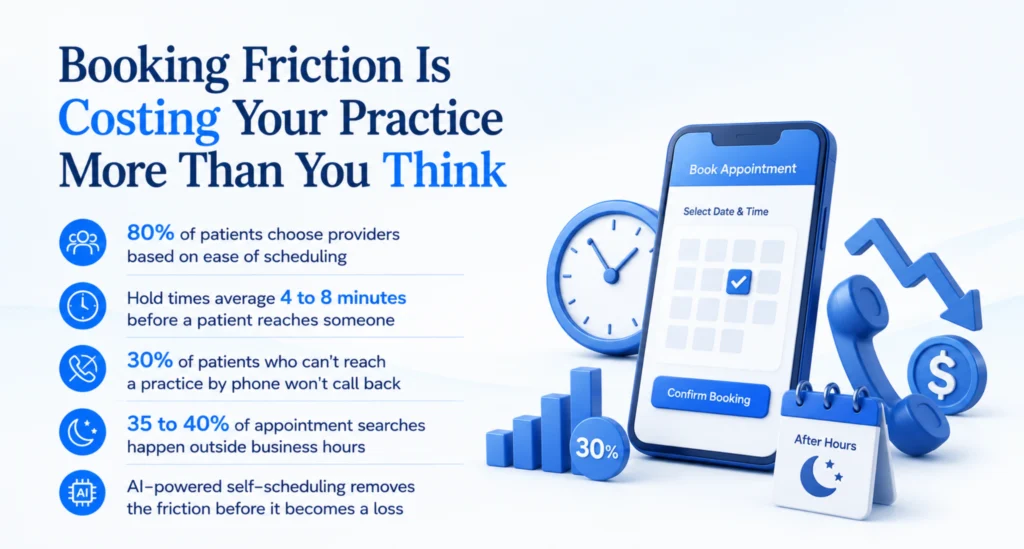
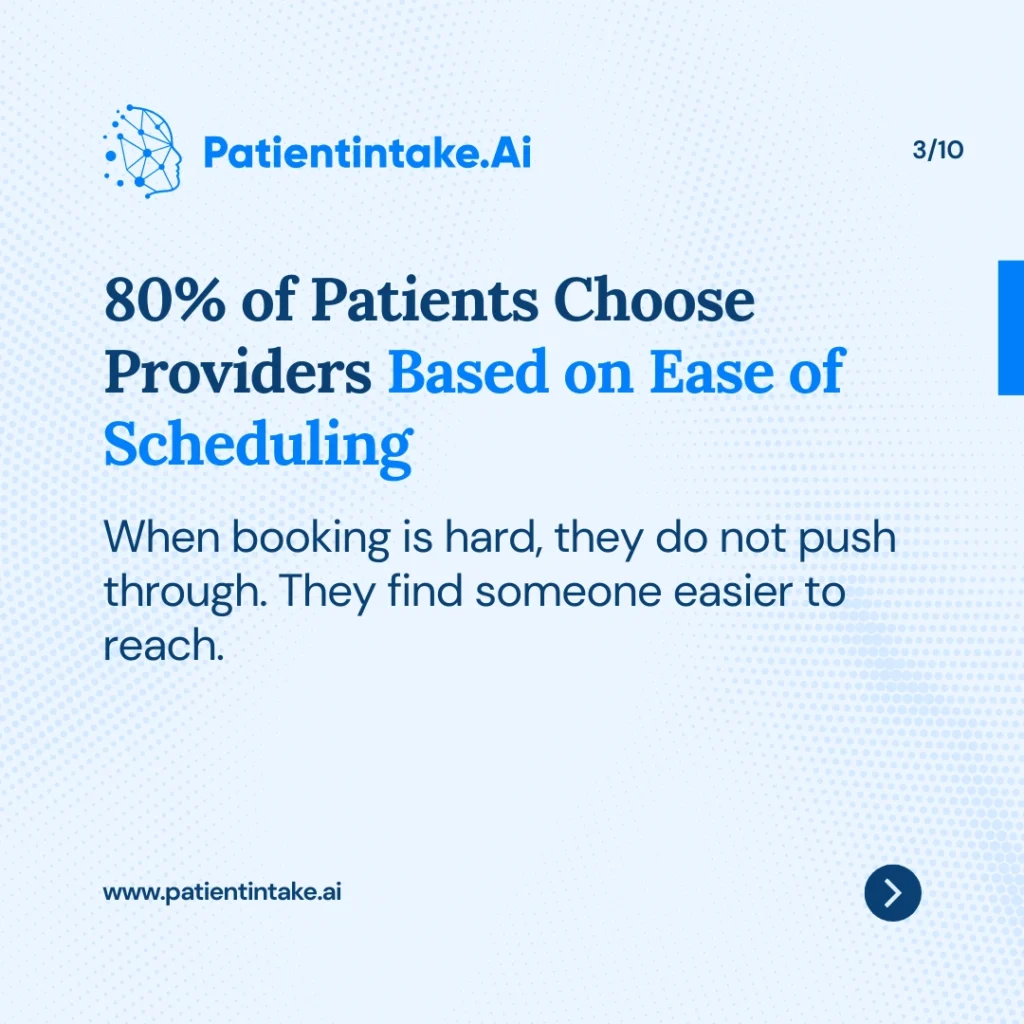
Ask a patient to spend more than three minutes booking an appointment and you will lose a share of them every single time. That is not an opinion. PR Newswire found that 80% of patients say ease of scheduling directly influences which provider they choose. When booking is hard, they choose someone else.
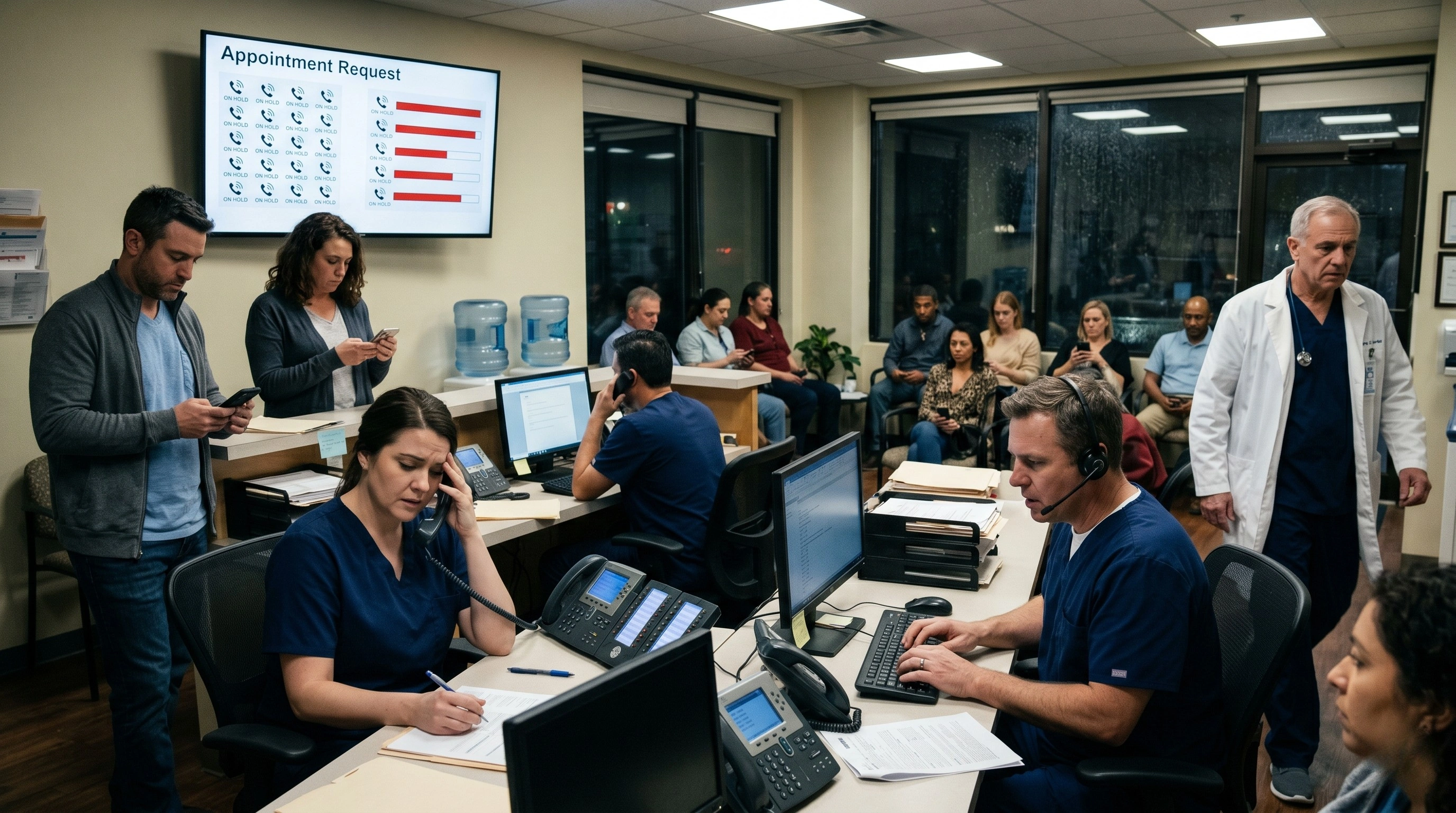
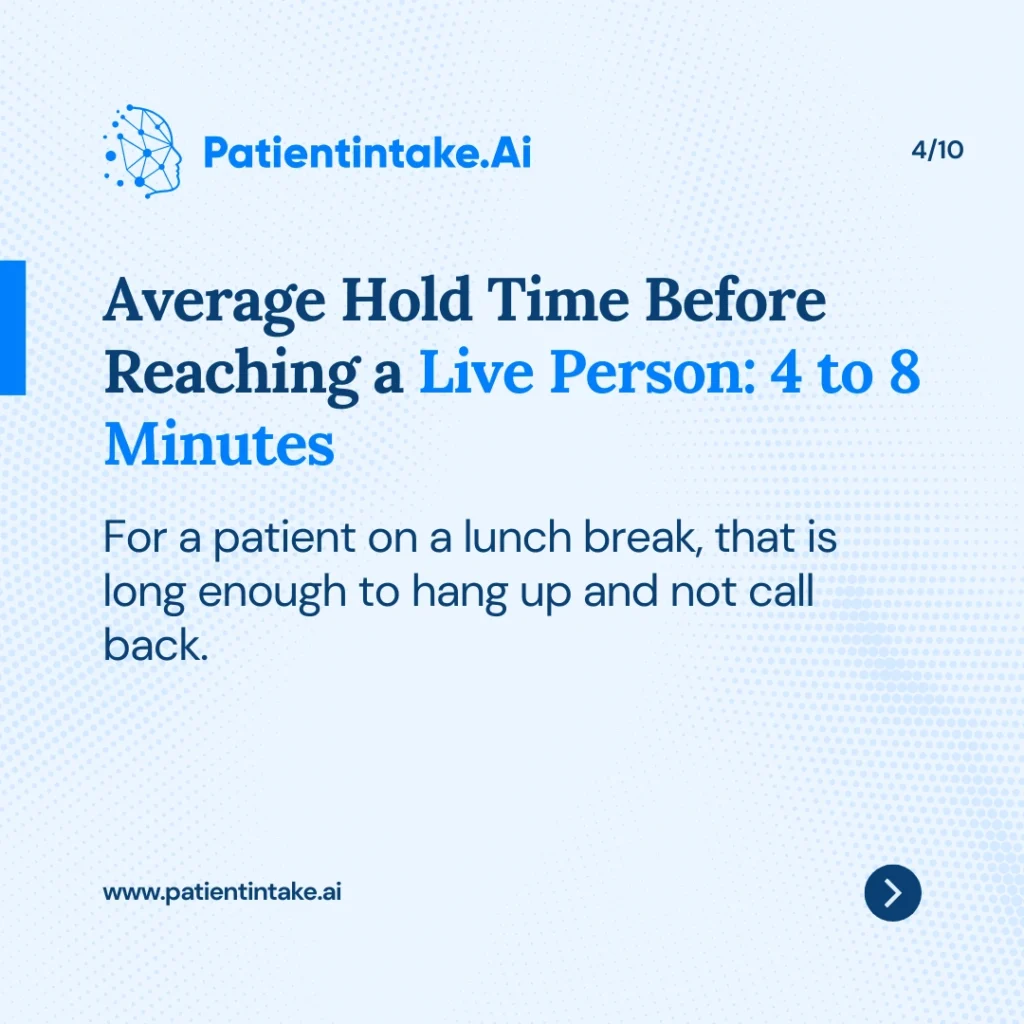
Phone scheduling is often where the patient experience starts to break down. In busy multi-provider practices, it’s common for patients to spend several minutes on hold before they can speak with someone and schedule an appointment. Add the 3 to 5 minutes for the actual scheduling conversation, insurance verification, and callback confirmation, and you are looking at a 10-plus-minute commitment just to get on the calendar.
For a patient calling during a lunch break, that is too long. For a patient with health anxiety who finally worked up the nerve to call, a long hold can be reason enough to hang up and put it off for another week. Or longer.
What booking friction actually costs your practice
Most practice managers track revenue per visit, no-show rates, and provider utilization. Very few track the appointment that was never made.
Here is what the gap looks like in real terms. A practice with 3 providers averaging 25 patients per provider per day runs about 75 patient visits daily. If patient booking friction causes even 5 new patients per week to abandon before scheduling, that is roughly 20 lost visits per month. At an average reimbursement of $150 per visit, that is $3,000 per month in revenue that does not appear anywhere on a report because it never entered the system.
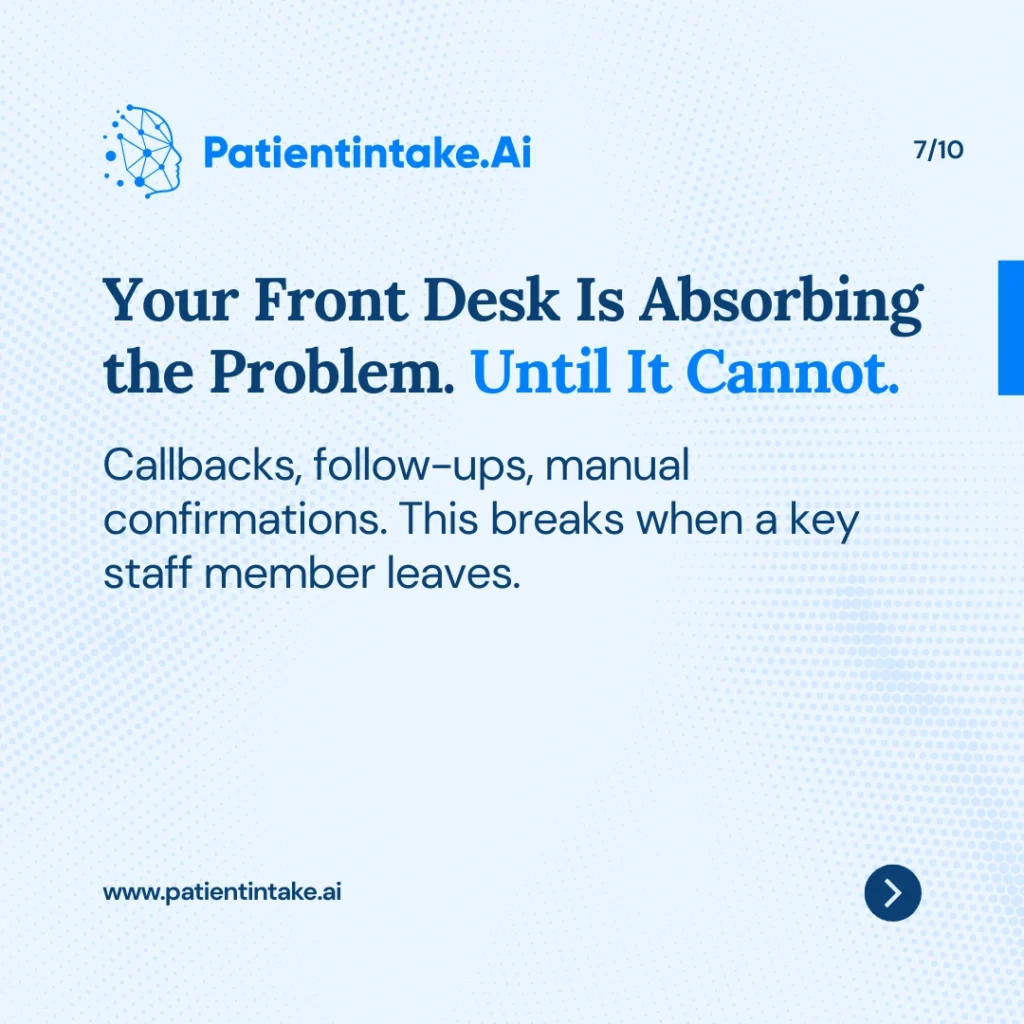
The front desk load tells a parallel story. Voiceoc data consistently shows that scheduling and registration account for 30 to 40 percent of inbound call volume at most practices. Each scheduling call averages 7 minutes of staff time. A practice fielding 80 calls per day is spending close to 5 hours on phone-based scheduling alone. That is most of one full-time position dedicated to a task that patient self-scheduling tools can handle automatically.
Where friction builds before the appointment ever happens
Patient booking friction does not happen at a single moment. It accumulates across several small failures, and each one is a decision point where a patient can leave.
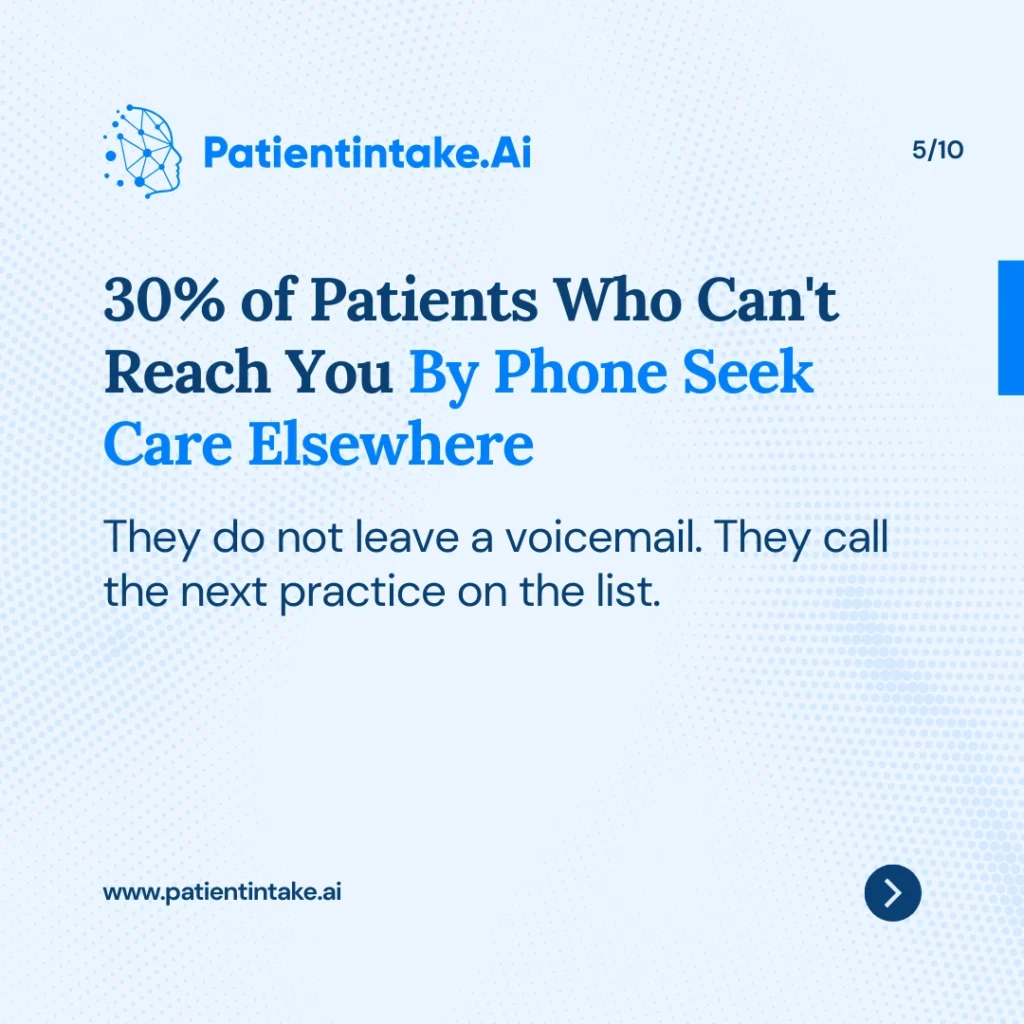
Phone hold time: Patients who call during peak hours hit the longest queues. Many hang up after 3 to 4 minutes. Some will try again. Many will not. Kyruus research found that 30% of patients who cannot reach a practice by phone will seek care elsewhere rather than call back.
Online scheduling that asks too much: If a patient has to create an account, verify an email, remember a password from a previous visit, re-enter insurance information already on file, and then pick from a provider list they have no context for, the process fails before it finishes. Each extra step is friction. Enough friction and the patient closes the tab.
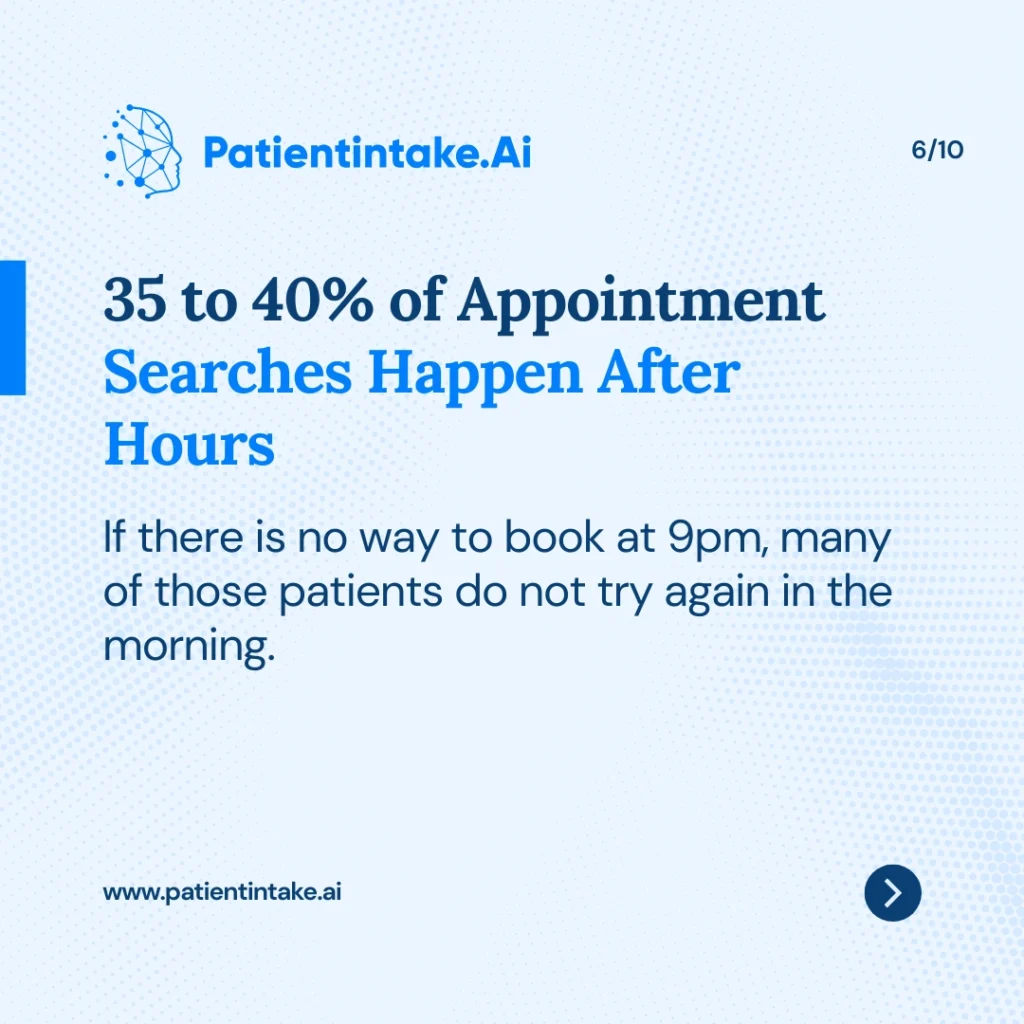
No after-hours option: Many patients look for appointments outside regular business hours, whether it’s after work, early in the morning, or over the weekend. If scheduling options aren’t available when they’re ready to book, practices risk losing those opportunities altogether. A patient sitting at 9pm who cannot book online and cannot reach anyone will try again tomorrow or will not. The data suggests it is often the latter.
Callback loops that break: Practices that use a callback system for overflow calls sometimes find that patients miss the return call, the interaction never completes, and the slot goes unfilled. This creates the appearance of low demand when the real problem is a broken handoff in the scheduling workflow.
How your front desk absorbs the problem, until it cannot
What patients experience on the other side
The clinical quality of your care is largely invisible to a new patient before their first visit. What they can see is your website, your music, and your confirmation process. That is their first experience of your practice.
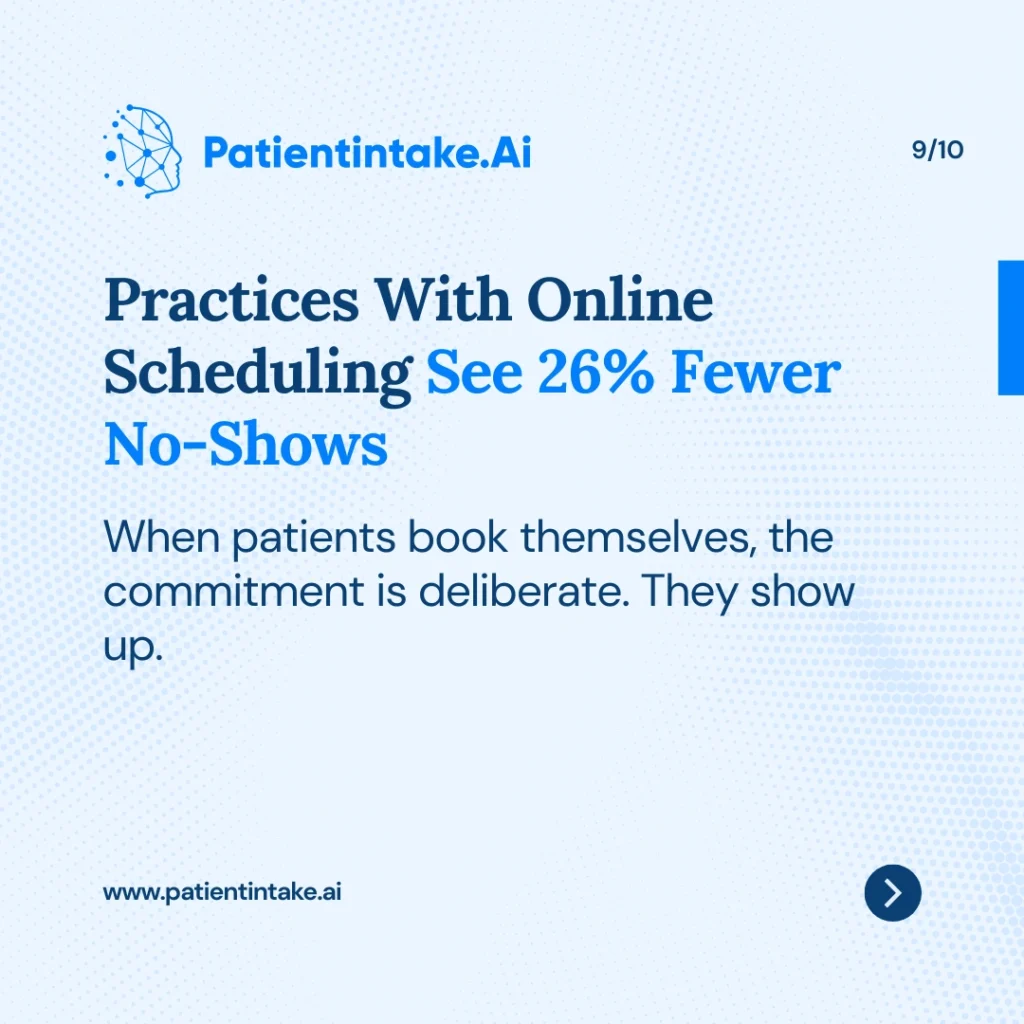
Practices that made online scheduling easy saw 26% fewer no-shows compared to phone-only booking. The connection between access and attendance is direct. A patient who calls three times before reaching someone, waits on hold, gets transferred, and has to re-explain the reason for their visit is not forming a neutral impression. They are forming a negative one. Some will keep the appointment anyway. Many will not. And very few will refer a friend or family member based on how pleasant the booking experience was.
The front desk is not the problem
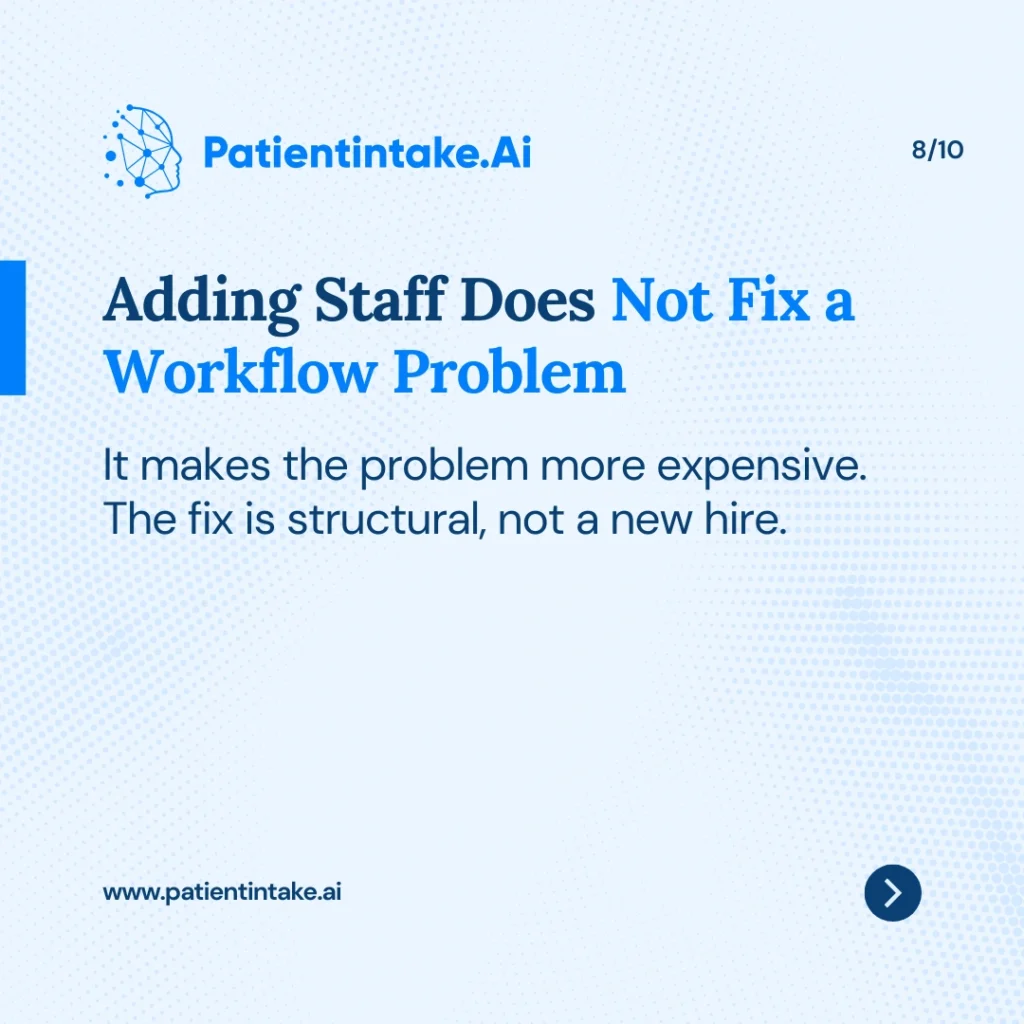
Adding another person to answer phones does not solve a workflow problem. It delays it and increases payroll in the process.
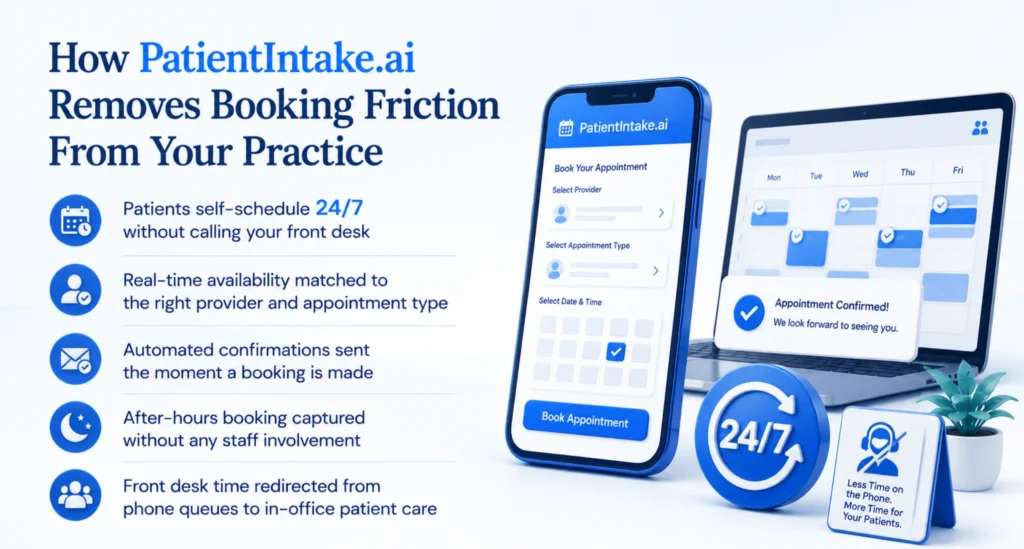
The practices that solve booking friction structurally are the ones that stop treating it as a volume issue and start treating it as a systems issue. Scheduling AI removes the phone queue from the equation entirely. Patients book when it is convenient for them, see real-time availability, and receive automatic confirmations. The front desk is freed from the scheduling queue and can focus on patients who are already in the office.
That shift does not just improve patient experience. It changes what your front desk team is actually doing all day, and what they are able to do well.
Three questions worth answering before next month
If you are not sure where your practice stands on booking friction, these are the right places to start.
What percentage of your inbound calls are scheduling-related? Your phone system should be able to pull this. If it cannot, that is itself useful information about your infrastructure.
What is the abandonment rate on your online scheduling tool? Most platforms track this. If yours does not, or if you do not have a patient self-scheduling option in place, that is worth addressing before your next capacity review.
What happens when a patient tries to book at 8pm on a Sunday? Go through the process yourself. If the answer is nothing happens, you are losing a portion of patients who wanted to book and had no way to do it.
Patient booking friction is anything that slows down or stops a patient from completing an appointment request. A long hold time, a confusing online form, no after-hours booking option, a callback that never connects: all of these count. It matters because friction does not just frustrate patients. It loses them. A patient who cannot book quickly enough either finds another provider or delays care entirely. Neither outcome shows up in your scheduling reports, which is exactly why most practices underestimate how much it costs them.
A few numbers tell the story quickly. Pull the percentage of inbound calls that are scheduling-related. Check whether your online scheduling tool tracks abandonment rates. Ask your front desk how many callbacks they make per day to patients who tried to book but did not complete. If you do not have answers to these questions readily available, that gap in visibility is itself a sign the problem is worth investigating. MGMA benchmarks are a useful reference for where your call volumes and staff time should sit relative to practices your size.
Yes, and the data on this is consistent. Accenture's health consumer research found that practices with online scheduling saw 26% fewer no-shows compared to phone-only booking. The likely reason is straightforward: when a patient books on their own time, at a moment of their choosing, the commitment feels more deliberate. Automated confirmation and reminder messages that come with most self-scheduling platforms also reduce the chance a patient simply forgets.
Most will use it if the experience is fast and simple. Kyruus Health research found that 68% of patients prefer online self-scheduling when the option is available and easy to use. The patients most likely to still call are older adults or those with complex insurance situations. A good scheduling setup handles both, offering online booking as the default while keeping phone access available. The goal is not to eliminate the phone. It is to stop the phone from being the only option.
A basic booking form shows available slots and lets a patient pick one. That is useful but limited. AI-powered scheduling goes further: it can match appointment type to the right provider, ask intake questions during the booking flow, flag potential scheduling conflicts, send automated reminders, and handle rescheduling without front desk involvement. The practical difference for a practice manager is that AI scheduling reduces the follow-up work that typically falls back on staff after a booking is made, not just the work of making the booking itself.